Chemistry Net: Physical & Theoretical Chemistry - Computational Chemistry
Showing posts with label Physical & Theoretical Chemistry - Computational Chemistry. Show all posts

Repurposing existing drugs for coronavirus 2019-nCoV (covid-19): in silico trial

Repurposing existing drugs for coronavirus 2019-nCoV (covid-19): in silico trial l

Repurposing existing drugs for coronavirus 2019-nCoV (covid-19): in silico trial

In a previous post entitled "Drug Repurposing for coronavirus (COVID-19): in silico screening of known drugs against SARS-CoV-2 Spike protein" already approved drugs that have some efficacy against similar type of viruses were tested with SARS-CoV-2 Spike protein bound to angiotensin converting enzyme 2 (ACE2) (6M0J: Receptor binding domain, RBD) using computational chemistry methods and molecular docking. These drugs listed in Table I.1 of the above post were as follows: darunavir, remdesivir, chloroquine, hydroxychloroquine, colchicine, favipavir, oceltamivir.

Amongst the above drugs the highest binding affinity for 6M0J is shown by darunavir (-8.4 kcal/mol) according to Autodock Vina (the second highest affinity is shown by remdesivir -6.4 and the third by remdesivir -8.0 kcal/mol) . Darunavir shows the second highest affinity according to iGemDock (-117.0429) while remdesivir scores higher (-129.6619).

It should be mentioned that computational chemistry methods and molecular docking results of drug efficacies not to be taken as medical advice or evidence supporting a specific treatment.

The same procedure is followed in this post to test the binding affinity of lopinavir for the SARS-CoV-2 Spike protein bound to angiotensin converting enzyme 2 (ACE2) (6M0J: Receptor binding domain, RBD). It is known that the virus enter the host cell by binding of the viral spike glycoprotein to the host receptor, angiotensin converting enzyme 2 (ACE2). Lopinavir is an antiretrovial of the protease inhibitor class. It is an approved drug used against HIV infections in combination with another protease inhibitor, ritonavir.

The steps required for drug screening are as follows:

  • Find the 3D molecular structures of Covid-19 from the Protein Data Bank PDB.
  • The crystallized SARS-CoV-2 spike receptor-binding domain bound with ACE2 (6M0J) was selected. It is shown in Fig. I.1 below:
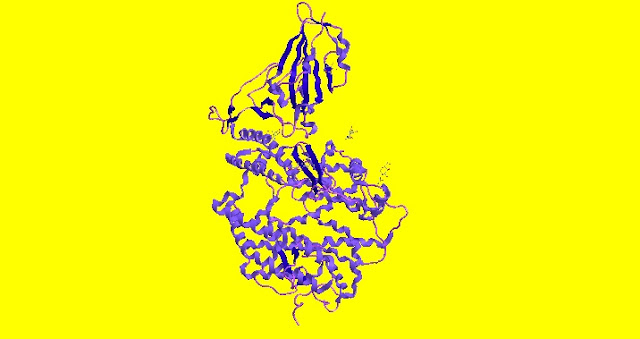
    Fig. I.1: SARS-CoV-2 spike receptor-binding domain bound with ACE2 (6M0J)

  • Find the molecular structures of drugs (ligands) with efficacy against similar viruses.
  • Hundrends of drugs can be found. In this case lopinavir is going to be tested. The 3D and 2D structures of lopinavir is shown in Fig. I.2 below:

    Fig. I.2: remdesivir molecular structure (2d and 3d)

  • Find the ground state optimization of these drugs (ligands).
  • The ground state optimization of a compound is the molecular geometry with the lowest energy (the most stable molecular geometry). There are several computational chemistry softwares that use semiempirical and ab initio methods to obtain the ground state geometry of a compound. Some of them are: Gamess, Gaussian, Orca, Avogadro, Firefly, Arguslab. The Arguslab software was used and the PM3 method was selected. This method is semiempirical and fast but not as accurate as the high level ab intio methods. PM3, or Parametric Method 3, is based on the Neglect of Differential Diatomic Overlap integral approximation. The Orca software was also used for two ab initio methods STO3G/def2SVP and PBE0/def2SVP. The accuracy of the methods regarding molecular geometry optimization (ground state energy) is as follows: PM3 < STO3G/def2SVP < PBE0/def2SVP.

    The ground state optimized structure of lopinavir using the PBE0/def2SVP method is shown in Fig. I.3:

    Fig. I.3: lopinavir ground state PBE0/def2_SVP optimized structure

  • Calculate the HOMO - LUMO gap (energy difference gap between the HOMO and LUMO molecular orbitals) at the ground state molecular geometry of the drug (ligand) (from the above step).
  • The energy gap between the HOMO (highest occupied molecular orbital) and the LUMO (lowest unoccupied molecular orbital) is an important quantum chemical parameter that characterizes the chemical reactivity of a molecule. A molecule with a small energy gap is more reactive compared to a molecule with a large HOMO - LUMO gap. The HOMO - LUMO gap energy of each drug was calculated and is shown in Tables I.1 - I.3

  • The interaction of the above mentioned drugs (ligands) with SARS-CoV-2 spike receptor-binding domain bound with ACE2 (6M0J) (receptor) were determined using Molecular Docking.
  • The interaction of drugs with Covid-19 SARS-CoV-2 spike receptor-binding domain bound with ACE2 (6M0J) (receptor) were determined using two softwares Autodock Vina and iGemDock. During the docking process, the receptor and the ligand are rotated around their own coordinate origin and the separation between the two origins is varied. A score is calculated for each orientation and the lower binding energy obtained corresponds to the best interaction between the receptor and the ligand (highest binding affinity).

The results obtained are shown in Tables I.1 - I.3 below:

Table I1: Semiempirical PM3 Chemical & Docking Results for the Interaction of selected Drugs with Covid-19 6M0J
  Compound HOMO-LUMO energy gap (a.u.) Docking iGemDock Docking AutoDock - Vina (kcal/mol)
 
remdesivir
0.299555
-129.6619
-8.0
 
chloroquine
0.292904
-77.8347
-6.7
 
hydroxychloroquine
0.292930
-82.8867
-6.1
 
colchicine
0.305204
-85.0525
-7.3
 
darunavir
0.315079
-117.0429
-8.4
 
favipavir
0.328258
-65.3097
-6.0
 
oceltamivir
0.343420
-83.5736
-6.0
 
lopinavir
0.343073
-130.8427
-9.0


Table I2: Ab Initio STO3G/def2SVP Chemical & Docking Results for the Interaction of Lopinavir with Covid-19 6M0J
  Compound HOMO-LUMO energy gap (a.u.) Docking iGemDock Docking AutoDock - Vina (kcal/mol)
 
lopinavir
-138.2157
-9.2


Table I3: Ab Initio PBE0/def2SVP Chemical & Docking Results for the Interaction of Lopinavir with Covid-19 6M0J
  Compound HOMO-LUMO energy gap (a.u.) Docking iGemDock Docking AutoDock - Vina (kcal/mol)
 
lopinavir
-144.6062
-9.5


As it can be seen from Table I.1 the lowest HOMO-LUMO gaps at the PM3 level are observed for chloroquine, hydroxychloroquine and remdesivir. These molecules are the most reactive. However, the docking results for these three drugs show that remdesivir has the lowest binding energy and therefore the highest binding affinity for the receptor.

Amongst the drugs listed in Table I.1 the highest binding affinity for the protease of Covid-19 5R82 is shown by lopinavir (-9.0 kcal/mol), darunavir (-8.4 kcal/mol) and remdesivir (-8.0 kcal/mol) respectively according to Autodock Vina. Lopinavir appears to have the highest binding affinity for the receptor 6M0J.

Lopinavir also appears to have the highest affinity according to iGemDock (-130.843) while remdesivir is second (-129.661).

The ground state optimization of Lopinavir was also obtained using two ab initio methods STO3G/def2SVP and PBE0/def2SVP. The corresponding molecular structures obtained were tested with molecular docking to study their binding affinity with the receptor 6M0J (Table I.2 & I.3). As was expected even better binding affinities were observed. The most accurate must be considered the PBE0/def2SVP optimized and docked structure.

It is worth stressing that binding is not synonymous with inhibition. Even the most well bound molecule may have little effect on a protein if it targets the wrong site. One limitation of the work is the choice of binding site all the above drugs were tested against. This was constrained by the ligand used to stabilize the protein crystal structure.


Relevant Posts - Relevant Videos

A search to Medications to treat Covid-19 via Comput. Chem. methods and Molecular Docking

Drug Repurposing for COVID-19: in silico screening of known drugs against SARS-CoV-2 Spike protein

Drug Repurposing for Coronavirus (COVID-19): In Silico Screening of Known Drugs Against the SARS-CoV-2 Spike Protein Bound to Angiotensin Converting Enzyme 2 (ACE2) (6M0J). ChemRxiv. Preprint.

In Silico Drug Repurposing for coronavirus (COVID-19): Screening known HCV drugsagainst the SARS-CoV-2 Spike protein ACE2. Molecular Diversity (2022)

In Silico Drug Repurposing for coronavirus (COVID-19): Screening known HCV drugsagainst the SARS-CoV-2 Spike protein ACE2. ChemRxiv. Preprint.


References

  1. M. A. Thompson, “Molecular docking using ArgusLab, an efficient shape-based search algorithm and AScore scoring function,” in Proceedings of the ACS Meeting, Philadelphia, Pa, USA, March-April 2004, 172, CINF 42.
  2. O. Trott, A. J. Olson, "AutoDock Vina: improving the speed and accuracy of docking with a new scoring function, efficient optimization and multithreading", Journal of Computational Chemistry 31 (2010) 455-461
  3. K. Hsu, Y. Chen, S. Lin,. et al. "iGEMDOCK: a graphical environment of enhancing GEMDOCK using pharmacological interactions and post-screening analysis" BMC Bioinformatics 12, S33 (2011).
  4. J. Lan, J. Ge, J. Yu, et al. "Structure of the SARS-CoV-2 spike receptor-binding domain bound to the ACE2 receptor" Nature (2020). https://doi.org/10.1038/s41586-020-2180-5
  5. K. Kalamatianos et al. " Drug Repurposing for Coronavirus (COVID-19): In Silico Screening of Known Drugs Against the SARS-CoV-2 Spike Protein Bound to Angiotensin Converting Enzyme 2 (ACE2) (6M0J). ChemRxiv. Preprint. " ChemRxiv. Preprint. (2020). https://doi.org/10.1038/s41586-020-2180-5
  6. K. Kalamatianos et al. " In silico drug repurposing for coronavirus (COVID-19): screening known HCV drugs against the SARS-CoV-2 spike protein bound to angiotensin-converting enzyme 2 (ACE2)(6M0J)" Mol Divers (2022) https://link.springer.com/article/10.1007s11030-022-10469-7
  7. F. Neese, “The ORCA program system” Wiley Interdisciplinary Reviews: Computational Molecular Science, 2012, Vol. 2, Issue 1, Pages 73–78.


Key Terms

covid-19,HOMO , LUMO,ground state optimization, medication for covid-19, drugs for covid-19, molecular docking, ab initio methods, computational chemistry, binding energy, binding affinity,


Drug Repurposing for coronavirus (COVID-19): in silico screening of known drugs against SARS-CoV-2 Spike protein

Drug Repurposing for coronavirus (COVID-19): in silico screening of known drugs against SARS-CoV-2 Spike protein l

Drug Repurposing for coronavirus (COVID-19): in silico screening of known drugs against SARS-CoV-2 Spike protein

In a previous post entitled "A search to Medications to treat Covid-19 via Computational Chemistry methods and Molecular Docking" already approved drugs that have some efficacy against similar type of viruses were tested with Covid-19 5R82 protease (receptor) using computational chemistry methods and molecular docking. These drugs listed in Table I.1 of the above post were as follows: darunavir, remdesivir, chloroquine, hydroxychloroquine, colchicine, favipavir, oceltamivir.

Amongst all the above drugs the highest binding affinity for the protease of Covid-19 5R82 is shown by darunavir (-7.7 kcal/mol) according to Autodock Vina (the second highest affinity is shown by colchicine -6.4 and the third by remdesivir -6.3 kcal/mol) . Darunavir shows the second highest affinity according to iGemDock (-141.5402) while remdesivir scores a bit higher (-144.26573).

It should be mentioned that computational chemistry methods and molecular docking results of drug efficacies not to be taken as medical advice or evidence supporting a specific treatment.

The same procedure is followed in this post to test the binding affinity of these drugs for the SARS-CoV-2 Spike protein bound to angiotensin converting enzyme 2 (ACE2) (6M0J: Receptor binding domain, RBD). It is known that the virus enter the host cell by binding of the viral spike glycoprotein to the host receptor, angiotensin converting enzyme 2 (ACE2).

The steps required for drug screening are as follows:

  • Find the 3D molecular structure of Covid-19 from the Protein Data Bank PDB
  • .

    The crystallized SARS-CoV-2 spike receptor-binding domain bound with ACE2 (6M0J) was selected. It is shown in Fig. I.1 below:

    Fig. I.1: SARS-CoV-2 spike receptor-binding domain bound with ACE2 (6M0J)

  • Find the molecular structures of drugs (ligands) with efficacy against similar viruses.
  • Hundrends of drugs can be found. A great deal of open access data are available on the Internet. Some of them are: remdesivir, chloroquine, colchicine, darunavir, favipavir, oceltamivir. The 3D and 2D structures of remdesivir is shown in Fig. I.2 below:

    Fig. I.2: remdesivir molecular structure (2d and 3d)

  • Find the ground state optimization of these drugs (ligands).
  • The ground state optimization of a compound is the molecular geometry with the lowest energy (the most stable molecular geometry). There are several computational chemistry softwares that use semiempirical and ab initio methods to obtain the ground state geometry of a compound. Some of them are: Gamess, Gaussian, Orca, Avogadro, Firefly, Arguslab. The Arguslab software was used and the PM3 method was selected. This method is semiempirical and fast but not as accurate as the high level ab intio methods. PM3, or Parametric Method 3, is based on the Neglect of Differential Diatomic Overlap integral approximation. The ground state optimized structure of favipavir using the PM3 method is shown in Fig. I.3:

    Fig. I.3: favipavir ground state PM3 optimized structure

  • Calculate the HOMO - LUMO gap (energy difference gap between the HOMO and LUMO molecular orbitals) at the ground state molecular geometry of the drug (ligand) (from the above step).
  • The energy gap between the HOMO (highest occupied molecular orbital) and the LUMO (lowest unoccupied molecular orbital) is an important quantum chemical parameter that characterizes the chemical reactivity of a molecule. A molecule with a small energy gap is more reactive compared to a molecule with a large HOMO - LUMO gap. The HOMO - LUMO gap energy of each drug was calculated and is shown in Table I.1

  • The interaction of the above mentioned drugs (ligands) with SARS-CoV-2 spike receptor-binding domain bound with ACE2 (6M0J) (receptor) were determined using Molecular Docking.
  • The interaction of drugs with Covid-19 SARS-CoV-2 spike receptor-binding domain bound with ACE2 (6M0J) (receptor) were determined using two softwares Autodock Vina and iGemDock. During the docking process, the receptor and the ligand are rotated around their own coordinate origin and the separation between the two origins is varied. A score is calculated for each orientation and the lower binding energy obtained corresponds to the best interaction between the receptor and the ligand (highest binding affinity).

The results obtained are shown in Table I.1 below:

Table I1: Quantum Chemical & Docking Results for the Interaction of selected Drugs with Covid-19 6M0J
  Compound HOMO-LUMO energy gap (a.u.) Docking iGemDock Docking AutoDock - Vina (kcal/mol)
 
remdesivir
0.299555
-129.6619
-8.0
 
chloroquine
0.292904
-77.8347
-6.7
 
hydroxychloroquine
0.292930
-82.8867
-6.1
 
colchicine
0.305204
-85.0525
-7.3
 
darunavir
0.315079
-117.0429
-8.4
 
favipavir
0.328258
-65.3097
-6.0
 
oceltamivir
0.343420
-83.5736
-6.0
 

As it can be seen from Table I.1 the lowest HOMO-LUMO gaps at the PM3 level are observed for chloroquine, hydroxychloroquine and remdesivir. These molecules are the most reactive. However, the docking results for these three drugs show that remdesivir has the lowest binding energy and therefore the highest binding affinity for the receptor.

Amongst all the drugs listed in Table I.1 the highest binding affinity for the protease of Covid-19 5R82 is shown by darunavir (-8.4 kcal/mol) according to Autodock Vina (the second highest affinity is shown by remdesivir -8.0 and the third by chloroquine -6.7 kcal/mol) . Darunavir shows the second highest affinity according to iGemDock (-117.0429) while remdesivir scores higher (-129.661).

It is worth stressing that binding is not synonymous with inhibition. Even the most well bound molecule may have little effect on a protein if it targets the wrong site. One limitation of the work is the choice of binding site all the above drugs were tested against. This was constrained by the ligand used to stabilize the protein crystal structure, RZS. If DMS was used as the ligand instead of RZS, the drugs would have been tested against different sites and different results may have found.

For relevant posts see the links below.


Relevant Posts - Relevant Videos

A search to Medications to treat Covid-19 via Comp. Chem. methods and Molecular Docking

Repurposing existing drugs for coronavirus 2019-nCoV (covid-19): in silico trial

Drug Repurposing for Coronavirus (COVID-19): In Silico Screening of Known Drugs Against the SARS-CoV-2 Spike Protein Bound to Angiotensin Converting Enzyme 2 (ACE2) (6M0J). ChemRxiv. Preprint.

In Silico Drug Repurposing for coronavirus (COVID-19): Screening known HCV drugsagainst the SARS-CoV-2 Spike protein ACE2. ChemRxiv. Preprint.


References

  1. M. A. Thompson, “Molecular docking using ArgusLab, an efficient shape-based search algorithm and AScore scoring function,” in Proceedings of the ACS Meeting, Philadelphia, Pa, USA, March-April 2004, 172, CINF 42.
  2. O. Trott, A. J. Olson, "AutoDock Vina: improving the speed and accuracy of docking with a new scoring function, efficient optimization and multithreading", Journal of Computational Chemistry 31 (2010) 455-461
  3. K. Hsu, Y. Chen, S. Lin,. et al. "iGEMDOCK: a graphical environment of enhancing GEMDOCK using pharmacological interactions and post-screening analysis" BMC Bioinformatics 12, S33 (2011).
  4. J. Lan, J. Ge, J. Yu, et al. "Structure of the SARS-CoV-2 spike receptor-binding domain bound to the ACE2 receptor" Nature (2020). https://doi.org/10.1038/s41586-020-2180-5


Key Terms

covid-19,HOMO , LUMO,ground state optimization, medication for covid-19, drugs for covid-19, molecular docking, ab initio methods, computational chemistry, binding energy, binding affinity,


Computational Chemistry

Computational Chemistry

COMPUTATIONAL CHEMISTRY


Computational chemistry is rapidly emerging as a subfield of theoretical chemistry, where the primary focus is on solving chemically related problems by calculations.

The term computational chemistry is usually used when a mathematical method is sufficiently well developed that it can be automated for implementation on a computer. Computational chemistry is the application of chemical, mathematical and computing skills to the solution of interesting chemical problems. It uses computers to generate information such as properties of molecules or simulated experimental results.

The quantum and classical mechanics as well as statistical physics and thermodynamics are the foundation for most of the computational chemistry theory and computer programs. This is because they model the atoms and molecules with mathematics. Using computational chemistry software the following can be performed:

  • electronic structure determinations
  • geometry optimizations
  • frequency calculations
  • definition of transition structures and reaction paths
  • docking in protein calculations
  • charge and electron distributions calculations
  • calculations of potential energy surfaces (PES)
  • calculations of rate constants for chemical reactions (kinetics) thermodynamic calculations- heat of reactions, energy of activation
  • calculation of many other molecular and physical and chemical properties.

Computational chemistry is therefore one of the most fascinating branches of theoretical chemistry that is useful in resolving many chemical problems. It comprises of a wide variety of techniques and methods developed over the last century such as:

ab-initio (Latin for "from the beginning") a group of methods in which molecular structures can be calculated using nothing but the Schrödinger equation, the values of the fundamental constants and the atomic numbers of the atoms present.

semiempirical use approximations from empirical (experimental) data to provide the input into the mathematical models.

molecular mechanics uses classical physics and empirical or semi-empirical (pre-determined) force fields to explain and interpret the behavior of atoms and molecules.

Computational chemistry has become a useful way to investigate materials that are too difficult to find or too expensive to purchase. It also helps chemists make predictions before running the actual experiments so that they can be better prepared for making observations.


"I would like to emphasize my belief that the era of computing chemists, when hundreds if not thousands of chemists will go to the computing machine instead of the laboratory, for increasingly many facets of chemical information, is already at hand. There is only one obstacle, namely, that someone must pay for the computing time. " [Robert S. Mulliken (1896-1986), at the end of his Nobel address in 1966]


References

  1. F. Jensen. “Introduction to Computational Chemistry”, 2nd Edition, Jon Wiley and Sons Ltd., 2007
  2. S. M. P. Bachrach "Computational Organic Chemistry", Jon Wiley and Sons Ltd., 2007

A search to Medications to treat Covid-19 via Computational Chemistry methods and Molecular Docking

A search to Medications to treat Covid-19 via Computational Chemistry methods and Molecular Docking l

A search to Medications to treat Covid-19 via Computational Chemistry methods and Molecular Docking

In December 2019 the first cases of infection from a novel coronavirus (Covid-19) were reported. Since then Covid-19 is spreading at an alarming rate and has created an unprecedented health emergency around the globe. The virus has infected more than 3,000,000 people and 217,000 have died.

There is no effective vaccine and it will most likely take at least 1-1.5 year to develop one. Therefore the development of antiviral agents is an urgent priority even though it usually takes many years for new drugs to be discoverd, clinically tested and approved. A good strategy would be trying to find already approved drugs that have some efficacy against similar type of viruses. Then test the efficacy of these drugs using computational chemistry methods and molecular docking. The most effective of these drugs can then be clinically tested and approved. There is a great deal of open access data available on the Internet.

It should be mentioned that computational chemistry methods and molecular docking results of drug efficacies not to be taken as medical advice or evidence supporting a specific treatment.

The steps required for drug screening are as follows:

  • Find the 3D molecular structure of Covid-19 from the >Protein Data Bank PDB.
  • The crystallized main protease of Covid-19 (5R82) can be selected. It is shown in Fig. I.1 below:

    Fig. I.1: Crystal Structure of COVID-19 main protease (5r82) in complex with Z219104216

  • Find the molecular structures of drugs (ligands) with efficacy against similar viruses.
  • Hundrends of drugs can be found. A great deal of open access data are available on the Internet. Some of them are: remdesivir, chloroquine, colchicine, darunavir, favipavir, oceltamivir, niclosamide. The 3D and 2D structures of remdesivir is shown in Fig. I.2 below:

    Fig. I.2: remdesivir molecular structure (2d and 3d)

  • Find the ground state optimization of these drugs (ligands).
  • The ground state optimization of a compound is the molecular geometry with the lowest energy (the most stable molecular geometry). There are several computational chemistry softwares that use semiempirical and ab initio methods to obtain the ground state geometry of a compound. Some of them are: Gamess, Gaussian, Orca, Avogadro, Firefly, Arguslab. The Arguslab software was used and the PM3 method was selected. This method is semiempirical and fast but not as accurate as the high level ab intio methods. PM3, or Parametric Method 3, is based on the Neglect of Differential Diatomic Overlap integral approximation. The ground state optimized structure of favipavir using the PM3 method is shown in Fig. I.3:

    Fig. I.3: favipavir ground state PM3 optimized structure

  • Calculate the HOMO - LUMO gap (energy difference gap between the HOMO and LUMO molecular orbitals) at the ground state molecular geometry of the drug (ligand) (from the above step).
  • The energy gap between the HOMO (highest occupied molecular orbital) and the LUMO (lowest unoccupied molecular orbital) is an important quantum chemical parameter that characterizes the chemical reactivity of a molecule. A molecule with a small energy gap is more reactive compared to a molecule with a large HOMO - LUMO gap. The HOMO - LUMO gap energy of each drug was calculated and is shown in Table I.1

  • The interaction of the above mentioned drugs (ligands) with Covid-19 5R82 protease (receptor) were determined using Molecular Docking.
  • The interaction of drugs with Covid-19 5R82 protease (receptor) were determined using two softwares Autodock Vina and iGemDock. During the docking process, the receptor and the ligand are rotated around their own coordinate origin and the separation between the two origins is varied. A score is calculated for each orientation and the lower binding energy obtained corresponds to the best interaction between the receptor and the ligand (highest binding affinity).

The results obtained are shown in Table I.1 below:

Table I1: Quantum Chemical & Docking Results for the Interaction of selected Drugs with Covid-19 5R82 protease
  Compound HOMO-LUMO energy gap (a.u.) Docking iGemDock Docking AutoDock - Vina (kcal/mol)
 
remdesivir
0.299555
-144.2657
-6.3
 
chloroquine
0.292904
-80.9850
-6.1
 
hydroxychloroquine
0.292930
-93.6502
-5.9
 
colchicine
0.305204
-91.1003
-6.4
 
darunavir
0.315079
-141.5402
-7.7
 
favipavir
0.328258
-70.4370
-5.8
 
oceltamivir
0.343420
-94.2380
-5.7
 

As it can be seen from Table I.1 the lowest HOMO-LUMO gaps at the PM3 level are observed for chloroquine, hydroxychloroquine and remdesivir. These molecules are the most reactive. However, the docking results for these three drugs show that remdesivir has the lowest binding energy and therefore the highest binding affinity for the receptor.

Amongst all the drugs listed in Table I.1 the highest binding affinity for the protease of Covid-19 5R82 is shown by darunavir (-7.7 kcal/mol) according to Autodock Vina (the second highest affinity is shown by colchicine -6.4 and the third by remdesivir -6.3 kcal/mol) . Darunavir shows the second highest affinity according to iGemDock (-141.5402) while remdesivir scores a bit higher (-144.26573).

It is worth stressing that binding is not synonymous with inhibition. Even the most well bound molecule may have little effect on a protein if it targets the wrong site. One limitation of the work is the choice of binding site all the above drugs were tested against. This was constrained by the ligand used to stabilize the protein crystal structure, RZS. If DMS was used as the ligand instead of RZS, the drugs would have been tested against different sites and different results may have found.

For a similar post using a SARS-CoV-2 spike protein as a receptor see the link below.


Relevant Posts - Relevant Videos

Drug Repurposing for coronavirus (COVID-19): in silico screening of known drugs against SARS-CoV-2 Spike protein

Drug Repurposing for Coronavirus (COVID-19): In Silico Screening of Known Drugs Against the SARS-CoV-2 Spike Protein Bound to Angiotensin Converting Enzyme 2 (ACE2) (6M0J). ChemRxiv. Preprint.

In Silico Drug Repurposing for coronavirus (COVID-19): Screening known HCV drugs against the SARS-CoV-2 Spike protein ACE2. ChemRxiv. Preprint.


References

  1. M. A. Thompson, “Molecular docking using ArgusLab, an efficient shape-based search algorithm and AScore scoring function,” in Proceedings of the ACS Meeting, Philadelphia, Pa, USA, March-April 2004, 172, CINF 42.
  2. O. Trott, A. J. Olson, "AutoDock Vina: improving the speed and accuracy of docking with a new scoring function, efficient optimization and multithreading", Journal of Computational Chemistry 31 (2010) 455-461
  3. Hsu, K., Chen, Y., Lin, S. et al. iGEMDOCK: a graphical environment of enhancing GEMDOCK using pharmacological interactions and post-screening analysis. BMC Bioinformatics 12, S33 (2011).


Key Terms

covid-19,HOMO , LUMO,ground state optimization, medication for covid-19, drugs for covid-19, molecular docking, ab initio methods, computational chemistry, binding energy, binding affinity,