Chemistry Net: Biological Chemistry - Food Chemistry
Showing posts with label Biological Chemistry - Food Chemistry. Show all posts

Biological Chemistry - Food Chemistry

Biological Chemistry - Food Chemistry

FOOD CHEMISTRY


Food chemistry is the study of chemical processes and interactions of all biological and non-biological components of foods. It deals with the production, processing, distribution, preparation, evaluation, and utilization of food. Basic food chemistry is mainly concerned with the three primary components in food: carbohydrates, lipids and proteins.

Carbohydrates – empirical formula Cx(H2O)z - are the most widely distributed and abundant organic compounds on earth. They have a central role in the metabolism of plants and animals. Carbohydrate biosynthesis in plants starting from carbon dioxide and water in the presence of light – known as photosynthesis – is the basis for the existence of all other organisms which depend on the consumption of organic substances with food.

Carbohydrates represent one of the basic nutrients and are the most important source of energy. They are obtained from plant foods such as cereals, fruit and vegetables. Other important functions in food are fulfilled by carbohydrates. They act for instance as sweetening, gel or paste-forming and thickening agents, stabilizers and are also precursors for aroma and coloring substances, especially in thermal processing.

Carbohydrates are divided into monosaccharides (glucose, fructose, galactose), oligosaccharides (saccharose, maltose, lactose) and polysaccharides (starch, cellulose).


Lipids include fats, oils, waxes and cholesterol. They are insoluble in water and soluble in non-polar solvents. In the body, fat serves as a source of energy, a thermal insulator, and a cushion around organs. The majority of lipids are derivatives of fatty acids.

Some lipids act as building blocks in the formation of biological membranes which surround cells and subcellular particles. Such lipids occur in all foods, but their content is often less than 2%. Nevertheless, even as minor food constituents they deserve particular attention, since their high reactivity may strongly influence the organoleptic quality of the food. In most instances oils are from plants (nuts, olives and seeds) and fats are from animal products (meat, milk products, eggs and seafood). Lipids are used for flavor, to cook foods and to improve the texture of foods.


Proteins are vital components of all life. They are natural polymers made from combinations of 20 different 2-aminoacids. Every cell requires protein (amino acids) for structure and function. Eight of these amino acids are essential for adults and children and nine are essential for infants. Essential means that cannot be synthesized in large quantities in vivo and therefore they must be included in our diet.

Animal protein is generally more valuable nutritionally than vegetable protein because animal protein contains the full complement of essential amino acids. Vegetable protein, in general, tends to lack one or more of the essential amino acids. Cereal protein, for example, lacks lysine, which is an essential amino acid. In addition, proteins directly contribute to the flavor of food and are precursors for aroma compounds and colors formed during thermal or enzymatic reactions in production, processing and storage of food. Proteins also contribute significantly to the physical properties of food through their ability to build or stabilize gels, foams and emulsions.

The most important sources of protein are grain, oilseeds and legumes, followed by meat and milk. Some common protein-rich foods are prawns, fish, meat, beans, eggs, nuts, mushrooms, milk, soya beans, tofu, cheese and yoghurt.


References

  1. H-D. Belitz et al. “Food Chemistry”, 4th Edition, Springer Verlag, 2009
  2. P. Barham et al., Chem. Rev., 110, 2313 (2010)
  3. L.H. Skibsted, “Lipid Oxidation Pathways”, AOCS Press: Urbana, Illinois: 2008
  4. H.E. Nursten, “The Maillard reaction - Chemistry, biochemistry and Implications”, The Royal Society of Chemistry: Cambridge, 2005

Food Chemistry: Antioxidants and Oxidation Reactions in Foods

Food Chemistry: Antioxidants and Oxidation Reactions in Foods

Antioxidants and Oxidation Reactions in Foods

An antioxidant is a substance that delays the onset or slows the rate of oxidation. It is also used to extent the self-life of a food. Antioxidants play an important role in food chemistry.

Antioxidants can be divided into two categories:

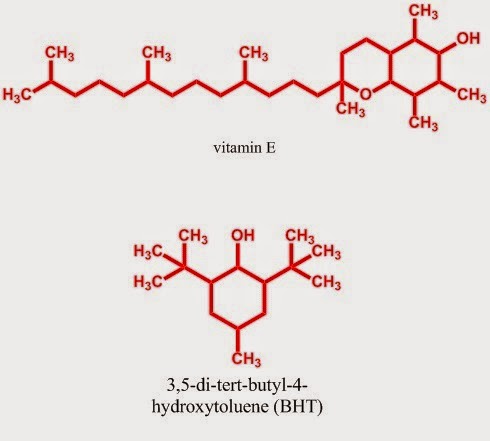
  • Naturally occurring (vitamin E, vitamin C, β-carotene) (Fig. I1)
  • Synthetic (2-BHA, 3-BHA, BHT) (Fig. I1)

Fig. I.1: Antioxidants are divided into two categories: natural (as an example vitamin E) and synthetic (as an example BHT)

The unsaturated bonds present in all fats and oils represent active centers that react with oxygen. This reaction leads to the formation of primary, secondary, and tertiary oxidation products that may make the fat or fat-containing foods unsuitable for consumption. This deterioration in flavor of fats and fatty foods is described as rancidity. Oxidation, in nearly all cases, leads to flavors that are not desirable, so we normally strive to reduce or avoid oxidation during storage and processing of food products. Most food components, are vulnerable to oxidation, and oxidation may change their flavor, color, and nutritive value.


What are the main factors that affect the rate of oxidation?

  • amount of oxygen present
  • degree of unsaturation of the compounds
  • presence of antioxidants
  • presence of catalysts for the oxidation (i.e. copper, heme-containing molecules)
  • light exposure
  • temperature of storage
  • nature of packaging material.


What is the mechanism of the oxidation reaction?

The oxidation reaction (autoxidation) can be divided into the following three steps:

  • Initiation: Hydrogen is abstracted from an olefinic compound to yield a free radical. The removal of hydrogen occurs at the carbon atom next to the double bond in the presence of a catalyst (metal) or light.

RH → R* + H*

  • Propagation: Once a free radical has been formed it will combine with oxygen to form a peroxy-free radical, which can in turn abstract hydrogen from another unsaturated molecule to yield a peroxide and a new free radical (propagation reaction).

R* + O2 → RO2*

RO2* + RH → ROOH + R*

The above reaction may be repeated up to several thousand times and has the nature of a chain reaction.

  • Termination: Termination occurs if the free radicals react with themselves to yield nonactive products.

R* + R* → R-R

R* + RO2* → RO2R

nRO2* → (RO2)n


What are the oxidation products produced when food products are oxidized?

Oxidation is a chain reaction with free radicals as reactive intermediates. Products generated can be divided as:

  • Primary oxidation products (hydroperoxides)
  • Secondary oxidation products (carbonyls)
  • Tertiary oxidation products (fatty acids)

The peroxides (ROOH) formed in the propagation step of the free radical reaction are the primary oxidation products. These oxidation products are generally unstable and decompose into the secondary oxidation products, which include a variety of compounds, including carbonyls, which are the most important.

The peroxides do not affect the flavor of foods. Their oxidation products though –aldehydes and ketones amongst other – known as secondary oxidation products are mainly responsible for flavor deterioration. As the aldehydes are themselves oxidized, fatty acids are formed. These free fatty acids may be considered tertiary oxidation products.


How antioxidants prevent food oxidation? Which are the main naturally occurring antioxidants? Which are the main synthetic antioxidants?

Antioxidants are added to foods such as oils, fats and butter as they react with oxygen-containing free radicals and prevent oxidation. Amongst the most important naturally occurring antioxidants are:

  • Vitamin E (Fig. I.1), a fat soluble vitamin, is a very effective natural antioxidant. It is found in foods such as nuts, wheat germ, seeds, whole grain and in vegetable oils
  • Vitamin C (Fig. I.2), is present in all animal and plant cells, mostly in free form, and it is probably bound to protein as well. Vitamin C is particularly abundant in rose hips, black and red currants, strawberries, parsley, oranges, lemons (in peels more than in pulp), grapefruit, a variety of cabbages and potatoes
  • β-Carotene (provitamin A), occurs in large amounts in apricots, cherries, cantaloups, carrots and peaches.
  • The element selenium, is present in fish, shellfish, meat, eggs, grain and chicken.


Fig. I.2: Vitamin C is a natural antioxidant found in several food products. 2 and 3-BHA, TBHQ and PG are synthetic antioxidants

Since for economic reasons, it is not always possible to use natural antioxidants several synthetic antioxidants have been prepared. Most of them are phenols with a hydroxyl group attached to the benzene ring.

Amongst them the most important synthetic antioxidants are:

  • BHA (Fig. I.2) Commercial BHA is a mixture of two isomers, 2- and 3-tert-butyl-4-hydroxyanisole
  • tert-Butylhydroquinone (TBHQ) (Fig. I.2) is a particularly powerful antioxidant used, for example, for stabilization of soya oil.
  • Propyl gallate, (PG) (Fig. I.2) is very active in fats and oils since it is enriched at the surface of fat and come in contact with air


In order to be used as an antioxidant, a synthetic compound has to meet the following requirements:

  • it should not be toxic
  • it has to be highly active at low concentrations (0.01–0.02%)
  • it has to concentrate on the surface of the fat or oil phase.

Utilization of antioxidants is often regulated by governments through controls on the use of food additives. In North America incorporation of antioxidants is permitted at a maximum level of 0.01% for any one antioxidant, and a maximum of 0.02% for any combination. The regulations related to permitted levels often vary from country to country.


Relevant Posts

Food Chemistry: Chemical reactions in cooking

Caramelization in Cooking - Caramelization Reactions

Food Preservatives: Sulfites and SO2


References
  1. E.N. Frankel, “Lipid Oxidation”, The Oily Press: Dundee, U.K. 1998
  2. H-D. Belitz et al., “Food Chemistry”, 4th Edition, Springer Verlag, 2009
  3. P. Barham et al., Chem. Rev., 110, 2313 (2010)
  4. L.H. Skibsted, “Lipid Oxidation Pathways”, AOCS Press: Urbana, Illinois: 2008

Key Terms

antioxidants, rancidity, oxidation of foods, vitamin E, vitamin C, ,BHA, , PG, TBHQ


Caramelization in Cooking - Caramelization Reactions

Food Chemistry: Caramelization

Sugar Caramelization Chemistry - Caramelization in Cooking

Foods with high carbohydrate and low nitrogen content can be caramelized when heated. It is well known from experience that flavor develops when a food is cooked (heated). There are a number of dishes (such as the cre´me brulees) where the flavors and color of the caramelization reactions are desirable. The most important reactions, from the prespective of flavor and aroma development, are those that are thermally activated. Amongst these reactions, the Maillard, Strecker and caramelization reactions are largely responsible for the flavors of chocolate and coffee, the caramel flavors of cooked sugars in deserts, on the crust of freshly baked bread and on the characteristic flavors of cooked meats.

The process of caramelization starts with the melting of sugar at temperatures above 120 °C. The main reactions that occur during the heating process are the following:

  • Sugars are dehydrated and double bonds are introduced into the structures.

Caramelization - Brown colored products with a typical caramel aroma are obtained by melting sugars (glucose in this case). A large number of furan and pyran compounds are formed

Fig. I.1: Caramelization - Brown colored products with a typical caramel aroma are obtained by melting sugars (glucose in this case). A large number of furan and pyran compounds are formed.

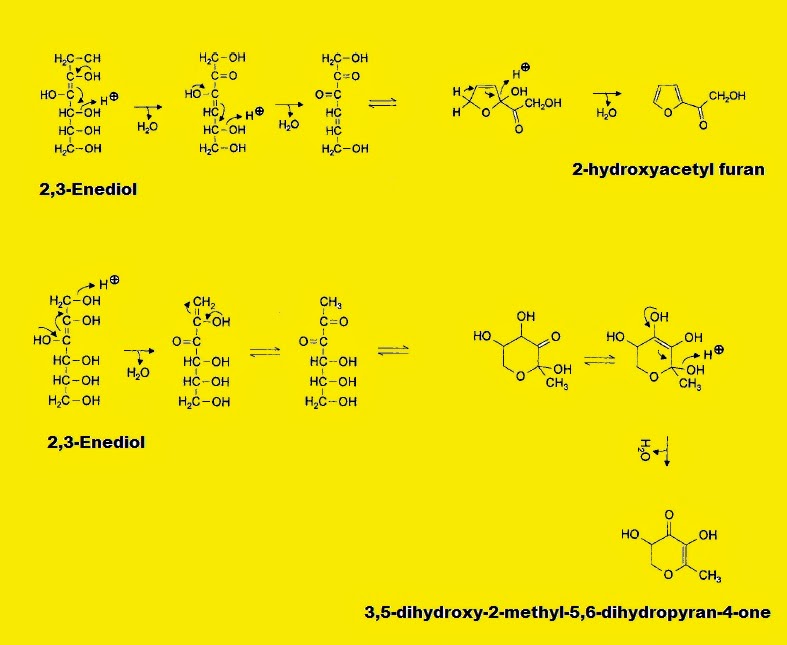
A large number of furan (have a nutty aroma) and pyran compounds are produced (Fig. I.1). The formation of these compounds can be explained by enolizations and dehydrating reactions of carbohydrates (mechanisms are shown in Fig. I.2a and I.2b). The reaction pathway in acidic conditions starts slowly with enolization to key intermediates called enediols. Glucose, for example, reacts to form 1,2-enediol and fructose gives rise to 2,3-enediol. These enediols further react to produce 5-hydroxymethyl furfural (HMF) and 2-hydroxyacetyl furan respectively. The steps for the production of HMF from 1,2-enediol involves elimination of water (retro-Michael addition) at C-3 and subsequently at C-4 and cyclization of the intermediate produced to a hemiacetal which releases another water molecule to produce HMF (Fig. I.2a).

Fig. I.2a: Formation of HMF from the intermediate 1,2-Enediol after water elimination and subsequent cyclization

Fig. I.2a: Formation of HMF from the intermediate 1,2-Enediol after water elimination and subsequent cyclization

The steps for the production of 2-hydroxyacetyl furan from 2,3-enediol (produced from fructose) involve water elimination at C-4 followed by a second water eleimination at C-5. (Fig. I.2b). With 2,3-enediol another reaction pathway is also possible the elimination of hydroxyl group at C-1 producing a dihydropyranone - 3,5-dihydroxy-2-methyl-5,6-dihydropyran-4-one - after cyclization (Fig. I.2b). It is worth to mention that both HMF and 3,5-dihydroxy-2-methyl-5,6-dihydropyran-4-one are used as indicators for the heating of foods containing carbohydrates (i.e honey).

Fig. I.2b: Mechanism of formation of 2-hydroxyacetyl furan and 3,5-dihydroxy-2-methyl-5,6-dihydropyran-4-one from the intermediate 2,3-Enediol after water elimination and subsequent cyclization

Fig. I.2b: Mechanism of formation of 2-hydroxyacetyl furan and 3,5-dihydroxy-2-methyl-5,6-dihydropyran-4-one from the intermediate 2,3-Enediol after water elimination and subsequent cyclization


  • The small sugar molecules react together by condensation reactions (at temperatures above 150 °C) to produce polymers with conjugated double bonds which absorb light and give brown colors

Heating for example glucose syrup with sulfuric acid in the presence of ammonia produces intensively colored polymers ("sucre couleur"). Caramelization of sucrose (table sugar) requires a temperature of approximatelly 200 °C. At 160 °C, sucrose melts and forms glucose and fructose anhydride. At 200 °C, the reaction process consists of three distinct stages well separated in time. The first step requires 35 minutes of heating and a weight loss of 4.5 % is observed in the solution, corresponding to a loss of one molecule of water per molecule of sucrose. After an additional 55 minutes of heating, the weight loss amounts to 9% and the pigment formed is named caramelan (Fig I.2c). Caramelan is soluble in water and ethanol and has a bitter taste. A further 55 minutes of heating leads to the formation of caramelen. This compound corresponds to a weight loss of about 14%, which is about eight molecules of water from three molecules of sucrose (Fig I.2c). Caramelen is soluble in water and melts at 154 °C. Additional heating gives a very dark, nearly insoluble pigment C125H188O80 called caramelin or humin. The typical caramel flavor is the result of a number of sugar fragmentation and dehydration products like diacetyl, acetic acid, formic acid and furanone.

Fig. I.2c: Caramelization of sucrose (table sugar) leading to the formation of caramelan and caramelen

Fig. I.2c: Caramelization of sucrose (table sugar) leading to the formation of caramelan and caramelen

    • Smaller volatile compounds are formed by fragmentation reactions of sugars and these give unique flavors and fragrances (Fig. I.3)

Hydroxyaldehydes and hydroxyketones are formed by chain cleavage of sugars (fructose in Fig. I.3) due to retroaldol reactions in the presence of dilute alkali at high temperatures. Fructose can yield glyceraldehyde and dihydroxyacetone which easily undergoes water elimination to produce 2-oxopropanal ( pyruvaldehyde) used often as a synthetic flavoring agent.

Fig. I.3: Mechanism of formation of glyceraldehyde and pyruvaldehyde from fructose during the caramelization process (heating above 120 °C)

Fig. I.3: Mechanism of formation of glyceraldehyde and pyruvaldehyde from fructose during the caramelization process (heating above 120 °C)

In the presense of amines reactions like the above take place under milder conditions (Maillard reaction) and in addition serve as a source for other heterocyclic compounds to be generated. The intermediate stage of the Maillard reaction and related reactions provides a complex pool of reactive compounds, which are subjected to rearrangements and further reactions producing several classes of heterocyclic (volatile) products, several of which are important for cooked flavor.


Relevant Posts

Food Chemistry: Chemical reactions in cooking

Food Chemistry: Antioxidants and Oxidation Reactions in Foods


References

  1. P. Barham et al., Chem. Rev., 110, 2313 (2010)
  2. P. Walstra, "Physical Chemistry of Foods", Marcel Dekker Inc., 2003
  3. J.M DeMan, "Principles of Food Chemistry", 3rd Edition, Aspen Publishers Inc., 1999
  4. H-D. Belitz et al., “Food Chemistry”, 4th Edition, Springer Verlag, 2009


Key Terms

caramelization, caramelization reactions, caramelization of sucrose, enolization, , carbohydrates, HMF, caramel flavors


Food Preservatives: Sulfites and SO2

Food Chemistry: Sulfites and SO2 as food preservatives

Food Chemistry: Sulfites and SO2 as food preservatives

Preservatives or antimicrobial agents play an important role in today's supply of safe and stable foods. Increasing demand for long self-life of processed foods makes the use of chemical food preservatives necessary. The activity of these preserving agents covers yeasts, molds and bacteria. The activity increases with decreasing pH and is mostly derived from undissociated sulfurous acid, which predominates at a pH < 3.

The use of sulfites as food preservatives in wine for example dates back to ancient times. In our days, sulfur dioxide - a gas sold in cylinders - can be injected directly in liquids or it can be dissolved in ice-water to form sulfurous acid. Most of the time though, instead of sulfur dioxide solutions, a number of sulfites are used (Table I.1) because, when dissolved in water, they all yield active SO2.

Name

Formula

% Active SO2

Sulfur dioxide

SO2

100

Sodium sulphite, anh.

Na2SO3

50.80

Sodium hydrogen sulfite

NaHSO3

61.56

Sodium metabisulfite

Na2S2O5

67.39

Potassium metabisulfite

K2S2O5

57.63

Table I.1: Common sulfites that are used as food preservatives

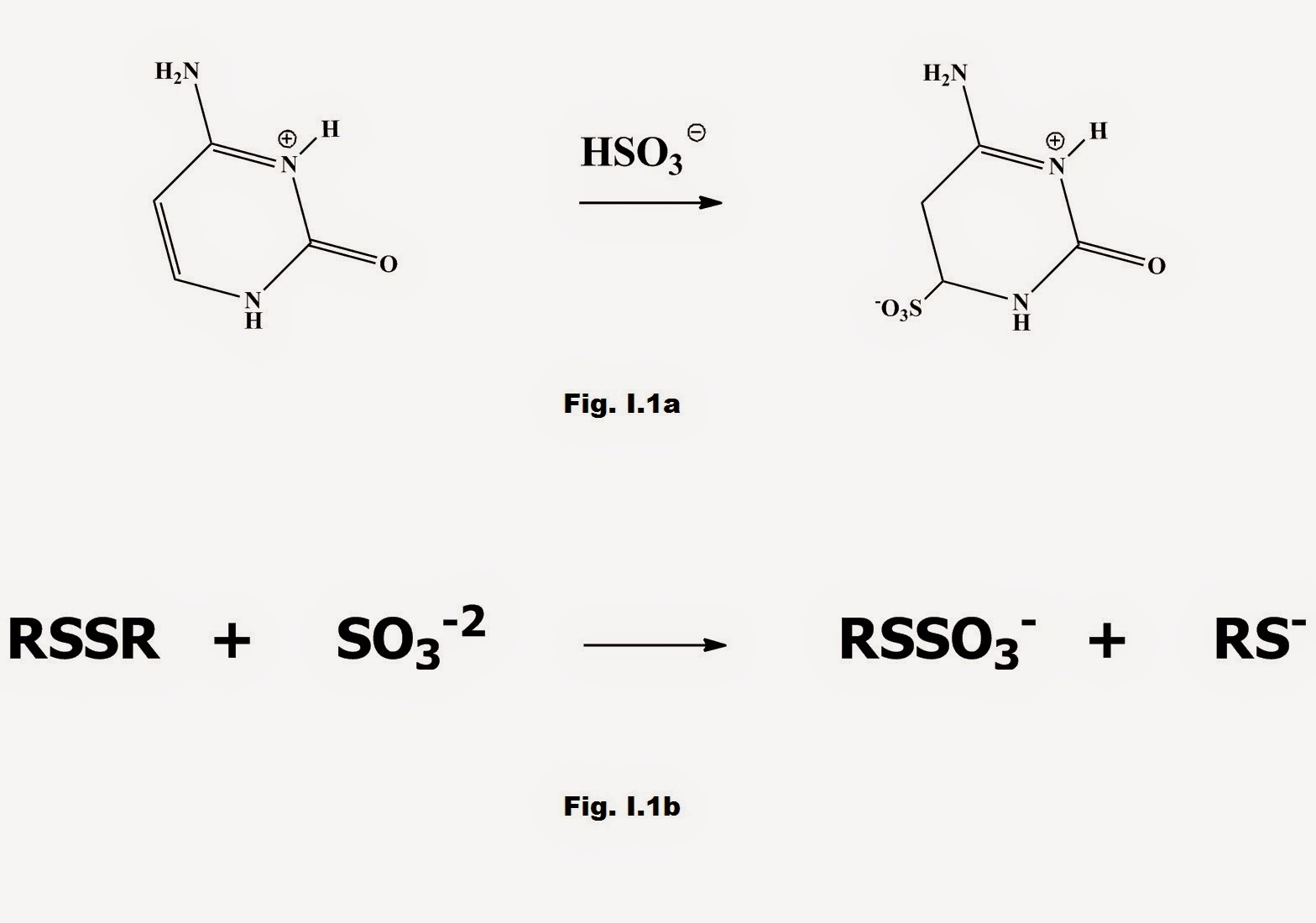
The most widely used of the above sulfites is potassium metabisulfite. Sulfite (bisulfite ion HSO3-) reacts with a series of food constituents e.g. proteins with cleavage of disulfide bonds, folic acid, dextrins, aldehydes and ketones to form addition compounds (Fig. I.1):

Fig. I.1 a) Pyrimidines in nucleic acids react with HSO3- to form addition compounds b) Aldehydes react with HSO3- to form addition compounds 

Fig. I.1 a) Pyrimidines in nucleic acids react with HSO3- to form addition compounds b) Cleavage of S-S bonds in aminoacids by SO3-2 to form addition compounds

The addition compounds of sulfites are known as bound sulfur dioxide. Sulfur dioxide is used extensively in wine making, and in wine acetaldehyde reacts preferentially with bisulfite. Excess bisulfite reacts with sugars. It is possible to classify bound SO2 into three forms:

• aldehyde sulfurous acid

• glucose sulfurous acid

• rest sulfurous acid (holds the SO2 in a less tightly bound form)

Crushed grapes or must are treated with sulfur (by the addition of sulphites or an aqueous solution of sulfurous acid or by adding liquid SO2) immediately after grape crushing to preserve the constituents that are sensitive to oxidation, prevent enzymatic browning via phenol oxidation and suppress the growth of undesirable microorganisms (acetic acid bacteria, molds). Another important effect is the suppression of undesirable aroma notes by the binding of carbonyl compounds, especially of ethanal, as hydroxysulfonic acids. Therefore, sulfites in wines serve a dual purpose: antiseptic or bacteriostatic and antioxidant.

The maximum quantities of SO2 added to foods is self-limiting because at levels from 200 ppm the product may develop an unpleasant off-flavor. The acceptable daily intake is set to 1.5 mg/kg body weight. Although some other compounds – such as sorbic acid and ascorbic acid – have been used as alternatives to partially replace SO2 the results were not satisfactory.

SO2 is also widely used in dried fruits, where levels may be up to 2000 ppm. Other applications are in dried potato products and in dried vegetables. Because SO2 is volatile and easily lost to the air, the residual levels may be much lower than the amounts originally applied.

Sulfite and SO2 are not only antimicrobially active, but inhibit discoloration by blocking compounds with a reactive carbonyl group (Maillard reaction - nonenzymic browning) or by inhibiting oxidation of phenols by phenol oxidase enzymes (enzymatic browning).


Relevant Posts

Food Chemistry: Chemical reactions in cooking

Food Chemistry: Antioxidants and Oxidation Reactions in Foods


References

  1. H-D. Belitz et al., “Food Chemistry”, 4th Edition, Springer Verlag, 2009
  2. P. Barham et al., Chem. Rev., 110, 2313 (2010)
  3. P. Walstra, "Physical Chemistry of Foods", Marcel Dekker Inc., 2003
  4. J.M DeMan, "Principles of Food Chemistry", 3rd Edition, Aspen Publishers Inc., 1999

Key Terms

preservatives, food chemistry, molecular gastronomy, Maillard reaction, antimicrobial agents, chemical food preservatives, preserving agents, sulfites as preservatives, active SO2


Food Chemistry: The browning reaction or reactions of amino acids during cooking

Food Chemistry: The browning reaction or reactions of amino acids at higher temperatures during cooking

Food Chemistry: Chemical reactions in cooking

It is well known from experience that food flavor develops during the heating process (cooking) of foods. For example the caramelization reactions are responsible for the flavors of: chocolate and coffee, freshly baked bread, cakes, cooked meats and others. Reactions at elevated temperatures are important during the preparation of food. Roasting, frying, boiling and baking develop the typical aromas of many foods in which amino acids participate as precursors. Studies with food and model systems have shown that the characteristic odorants are formed via the Maillard reaction and that they are subsequent products, in particular of cysteine, methionine, ornithine and proline (Fig. I.1). The formation of brown products on heating aqueous mixtures of amino acids and sugars was first described by the French chemist Louis Maillard in 1912.

Fig. I.1: Structures of selected amino acids: 1) cysteine 2) methionine 3) ornithine 4) proline

The nonenzymic browning or Maillard reaction is of great importance in food manufacturing and its results can be either desirable or undesirable. For example, the brown crust formation on bread is desirable; the brown discoloration of evaporated and sterilized milk is undesirable. For products in which the browning reaction is favorable, the resulting color and flavor characteristics are generally experienced as pleasant. In other products, color and flavor may become quite unpleasant.

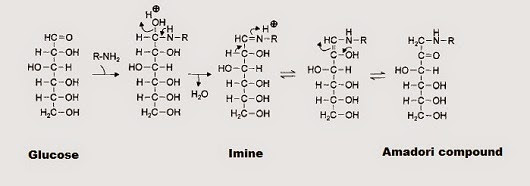
The browning reaction can be defined as the sequence of events that begins with the reaction of the amino group of amino acids (Fig. I.2), peptides, or proteins with a glycosidic hydroxyl group of sugars; the sequence terminates with the formation of brown nitrogenous polymers or melanoidins.

Fig. I.2: Initial phase of the Maillard reaction showing the formation of Amadori compounds

When cooking a casserole with meat (Fig. I.3), the meat should be cooked in oil at high temperatures at the beginning to initiate the Maillard reaction (browning reactions) and release extra flavors.

Fig. I.3: Meat casserole

The reaction velocity and pattern of the process is influenced by the nature of the reacting amino acid or protein and the carbohydrate. This means that each kind of food may show a different browning pattern. Generally, lysine is the most reactive amino acid because of the free l-amino group. Since lysine is the limiting essential amino acid in many food proteins, its destruction can substantially reduce the nutritional value of the protein.

Foods that are rich in reducing sugars are very reactive, and this explains why lysine in milk is destroyed more easily than in other foods. Other factors that influence the browning reaction are temperature, pH, moisture level, metals, oxygen, phosphates, sulfur dioxide, and other inhibitors.

Food chemistry and molecular gastronomy (a new emerging discipline) show us – as it is shown above in the “browning reaction” - the scientific basis of what happens as we cook (and consume) our food. As a conclusion knowledge and understanding of chemistry can be applied to good effect in the domestic and restaurant kitchen.


Relevant Posts

Caramelization in Cooking - Caramelization Reactions

Food Chemistry: Antioxidants and Oxidation Reactions in Foods

Food Preservatives: Sulfites and SO2


References

  1. H-D. Belitz et al. “Food Chemistry”, 4th Edition, Springer Verlag, 2009
  2. P. Barham et al., Chem. Rev., 110, 2313 (2010)
  3. L.H. Skibsted, “Lipid Oxidation Pathways”, AOCS Press: Urbana, Illinois: 2008
  4. H.E. Nursten, “The Maillard reaction - Chemistry, biochemistry and Implications”, The Royal Society of Chemistry: Cambridge, 2005

Key Terms

preparation of food, food chemistry, molecular gastronomy, Maillard reaction,browning reaction, nonenzymic browning, characteristic odorants in food, caramelization, peptides, proteins, amino acid, sugars, cooking flavor theory, cooking flavor basics, cooking flavor trends, cooking for flavor